


You’re driving in your car, perhaps belting out one of your favorite songs on your way to a meeting. The phone rings. You only answer because the call is from your child’s school – you wonder if they’re sick and you’ll need to turn around and pick them up for the day. But the voice on the line shares the unimaginable: your child, your beautiful child, has said they are contemplating suicide. Your mind becomes a raging river of emotions and questions. Terror fills your veins. You shake, you cry, you wonder – what can I do? What did I miss? What should I have done differently? How can I help? Can I actually help? Your world splits apart in two minutes that feel like two years.
Now what? How does a parent prepare for something this earth-shattering?
The sad truth is that suicidal ideation among children and teens is higher than you may think. In the CDC’s 2025 Youth Risk Behavior Survey, 14.5% of high school students reported seriously considering attempting suicide, 12.5% made a suicide plan, and 6.4% reported attempting suicide. That’s roughly one in seven students – about four kids in a typical class of thirty. Definitely not uncommon. Why isn’t this discussed more openly? Why don’t more parents know the signs of suicide and the support available to them? Could it be because we believe that if we love our kids enough, they’ll never have these feelings? That if we encourage and praise them, they’ll build up enough resilience to prevent the painful thoughts that seep through the folds in their developing brains? That enough self-affirmations will form an innate defense against the troubles of the world? Whatever the reasons may be, we need to learn how to face the possibility of the unthinkable.
Now add another layer to the mix of childhood fears, teenage angst, and depression: what if separation from family, foster care, adoption, or other difficult early-life experiences are part of your child’s story? Young people involved in the child-welfare system can face additional challenges. An American Academy of Pediatrics clinical report cites research finding that youth involved with the child-welfare system were more likely to report suicidal ideation (24.7% vs 11.4%) or suicide attempts (3.6% vs 0.8%) compared with those not involved with the system. The report notes that children in foster care also experience disproportionately high exposure to adverse childhood experiences (ACES). These findings do not establish that foster care or family separation itself causes suicidal behavior, but it is worth noting the sensitive nature of the complex emotions children involved in systems grapple with.
Research involving adopted youth also points to an important area for attention. A U.S. study published in Pediatrics found that the odds of a reported suicide attempt were approximately four times higher among adoptees than non-adoptees. After researchers adjusted for other factors associated with suicidal behavior, the odds remained significantly elevated. Alabama’s young people are part of this larger national picture. State-specific data documents significant levels of suicidal thoughts among Alabama high school students, including differences by sex. Numbers could never tell the whole story of any child. They do, however, underscore why children and young people who have experienced separation, loss, trauma, or disruption of family relationships need adults who understand that their emotional experiences can be complex and long-lasting. For adoptive and foster families, supporting a child’s mental and emotional well-being means making space for difficult feelings, maintaining open communication, and knowing when additional professional support may be needed.
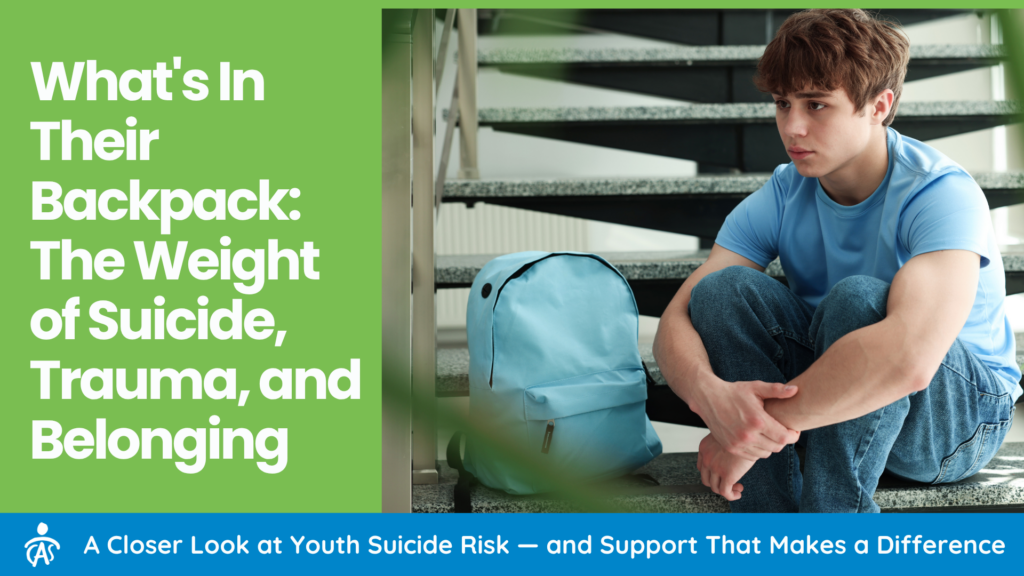
Our youth are carrying more than Chromebooks and pencils in their backpacks. The statistics may feel dire, but it’s important to note that youth suicidal ideation has actually declined in recent years. CDC data shared this year, shows that the share of U.S. high school students who seriously considered attempting suicide fell from 20% in 2023 to 14% in 2025. That decline represents meaningful progress. But any percentage is still far too many young people carrying that kind of pain, reminding us that there is more work to do to ensure every child has the support, connection and care they need to thrive. The conversation about mental health is becoming less stigmatized, and that makes a difference. When people aren’t isolated in their most challenging times, change happens.
Parents can’t be expected to tackle something this heavy on their own. There are multiple outlets for support, and we’ve shared some of them in this free downloadable resource. Many of these are suitable for parents of all backgrounds, but at Children’s Aid Society of Alabama, our work centers on children who’ve experienced foster care and adoption.
Our Alabama Pre/Post Adoption Connections (APAC) team offers free counseling for Alabama’s adoptees from foster care and their families. Services are available statewide, in person in the cities of Birmingham, Huntsville, Montgomery and Mobile or via telehealth. What’s especially unique about APAC’s counselors is that they are certified adoption-competent practitioners. APAC’s commitment to growing additional supports for adoptees runs deep – they’ve partnered with the Center for Adoption Support and Education (C.A.S.E.) to provide Training for Adoption Competency (TAC), so more counselors can become adoption-competent providers. Research shows families treated by TAC-trained clinicians attended nearly three times as many sessions on average as those treated by comparably qualified clinicians without the training, stayed in treatment longer, and reported significantly better outcomes and stronger therapeutic alliances. Nurturing a child’s sense of identity and belonging in the face of deeply challenging circumstances is a skill that must be honed to suit their needs. It’s a large piece of the scaffolding that helps youth thrive – and helps keep them safer.
Parents want to have all the answers. We want to be everything our children need. Sometimes it’s bigger than us. Get the information you need to point them toward the resources that can help. You don’t have to face this alone and more importantly, they won’t face this alone.
If you or someone you love is struggling, call or text 988 to reach the Suicide & Crisis Lifeline, available 24/7. Remember to download and share this resource for other helpful connections near you.
Arema Granger
Marketing Communications Coordinator